An engine built for deterministic fluid motion and low-latency interaction.
The Winorio Engine is not a wrapper; it is a ground-up reconstruction of how gaming logic interacts with the Document Object Model. Traditional web animations rely on the browser's compositor thread, which can introduce micro-stutters when the main thread is busy with game logic. Our engine bypasses this by implementing a custom deterministic physics simulation. Every particle, transition, and hover-state is calculated with 100% predictability across all hardware.
By allocating a strict "Motion Budget" of 3ms per frame, we ensure that the visual layer remains perfectly synchronized with the game state. Whether navigating a complex inventory or engaging in high-speed visual combat, the engine interpolates values on the main thread, resulting in a linear smoothness that CSS transitions simply cannot match.
Method Note: Our approach is evaluated against three core metrics: perceptual latency, thermal stability on mid-range Android devices, and bandwidth efficiency for the Turkish mobile market where data costs remain a critical constraint.
Shaders that adapt to
your hardware.
Our shader pipeline compiles GLSL at runtime, enabling dynamic visual mutations. If your device detects thermal throttling, the engine seamlessly reduces effect complexity without breaking the visual aesthetic. It’s a graceful degradation that keeps the Winorio experience consistent from high-end PCs to mid-range mobile devices.
Pitfalls Rail: Performance Traps
-
×
Over-draw: Most engines render overlapping invisible layers. We prune obstructed nodes before the paint cycle.
-
×
Jank: Garbage collection spikes kill immersion. Winorio uses a pool of reusable objects to bypass mid-play GC.

Stability Heatmap
Peak optimization for Istanbul Fiber Nodes.
Optimizing for the
Turkish Gaming Ecosystem.
In many regions, high-latency and expensive mobile data are the primary barriers to premium gaming. Winorio doesn't fight these constraints—we design around them. We sacrifice "ultra-realistic textures" in favor of "ultra-responsive logic" and vector-based asset systems.
Micro-Tilt Rendering
Uses device gyroscope data to shift layers by 2-5 pixels, creating 3D depth without full WebGL rendering costs.
Adaptive Contrast Engine
Analyzes real-time brightness and adjusts text strokes to ensure legibility in bright outdoor sunlight.
Ghost Mode Debugging
Built-in developer tools that render collision boxes directly on top of the live site for transparency.
Glossary with Opinion
- Interpolation Pool
- Our method of predicting touch movement. Our View: It’s better to be slightly predictive and smooth than 100% accurate and jittery.
- State Manager (CAS)
- Cascading Animation System. Our View: Traditional state managers are too heavy. We treat every click as a pebble in a pond—one event, multiple visual ripples.
- Memory Guardian
- Process that aggressively kills off-screen nodes. Our View: If it's not visible, it shouldn't exist in RAM. Zero exceptions.
- Latency Scoreboard
- A real-time display of engine tick speed. Our View: Transparency breeds trust. If we drop a frame, the dashboard should show it.
Engine Aesthetics in Action
A preview of component-level design. We don't just build apps; we build visual ecosystems where every pixel serves a functional purpose.
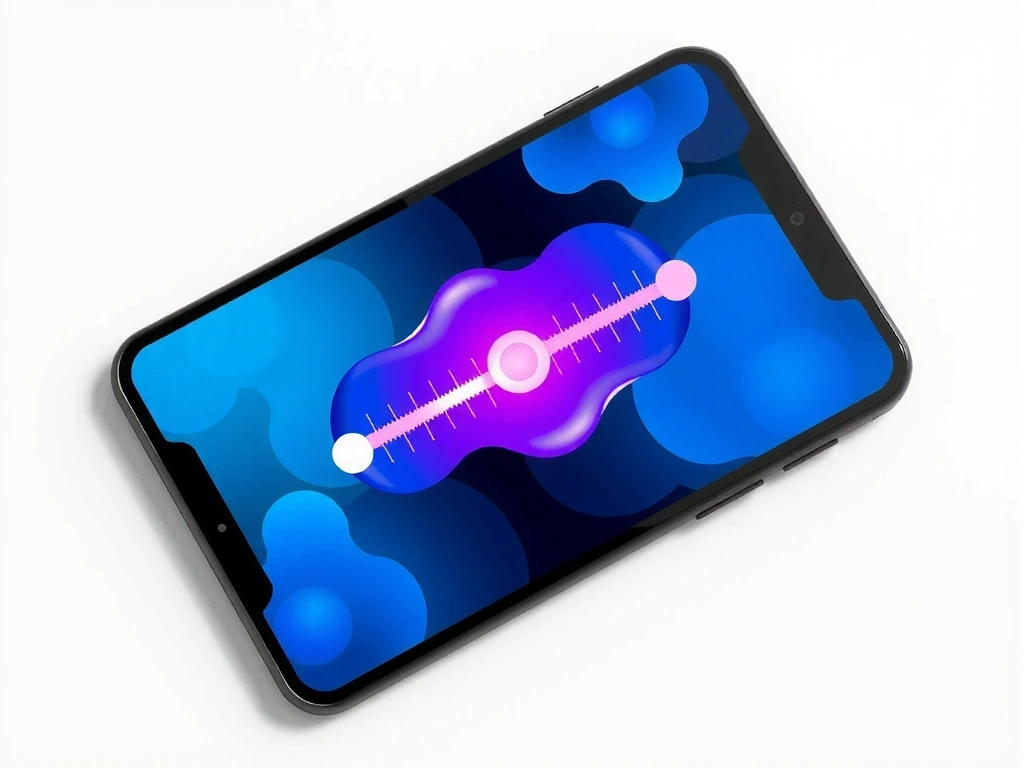
Audio Synthesis UI
Procedural sound waves synced to interaction speed.

Vector Navigation
High-DPI graphics that scale without performance loss.

Layered Parallax
Depth maps generated from image alpha channels.
Ready to see the engine in practice?
Discover our current library of applications built on the Winorio v4.2 core—optimized for reliability, speed, and the Turkish gaming landscape.
The Calibration Matrix
How we prioritize the user experience across different hardware profiles in Turkey.
Visual Fidelity
Standard rasterized elements are replaced by dynamic SVG paths.
Social Hubs
Integrated Turkish community features with data-saver mode.